
Overview
What is the Difference Between a KN95 and an N95?
The main difference between an N95 and a KN95 is where the respirator is certified. N95 respirators are certified by the National Institute for Occupational Safety and Health (NIOSH) in the USA. KN95 refers to the Chinese regulatory standard for filtering face piece respirator certification. Non-NIOSH certified respirators, such as KN95s, must not be used where respirators are required to minimize the risk of exposure to airborne particulates or bioaerosols. In campus facilities, KN95 masks may only be used as face covering, and not as a substitute for an N95 or other type of respiratory protection.
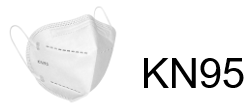
|
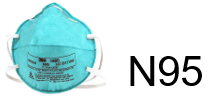
|
|
| Testing Approval | Certified in China | Evaluated, tested, and approved by NIOSH in the USA |
| Fit testing Required at UCSF | No | Yes |
| Allowed to be Used as Respiratory Protection | No. Non-NIOSH certified respirators must not be used where respirators are required to address the risk of occupational exposure to inhalation hazards | Yes, in situations where an N95 provides the required level of protection |
| Face Seal Fit | Loose-fitting; typically ear loop | Tight-fitting |
| Seal Check Requirement | No | Yes. Required each time the respirator is donned (put on) |
| Filtration | Does NOT provide the wearer with a reliable level of protection from inhaling smaller airborne particles and is not considered respiratory protection at UCSF | Filters out at least 95% of airborne particles including large and small particles |
| Use Limitations | Voluntary use as a face covering; disposable. | Depending on the setting, it should be discarded after each use, when breathing becomes difficult or when it becomes damaged, deformed, soiled, contaminated or wet. Cal/OSHA recommends a maximum respirator extended use period of 8–12 hours |
Exhalation Valves on N95s
An N95 respirator with an exhalation valve does provide the same level of protection to the wearer as one that does not have a valve. The presence of an exhalation valve reduces exhalation resistance, which makes it easier to breathe or exhale. Some users feel that a respirator with an exhalation valve keeps the face cooler and reduces moisture build up inside the facepiece.
However, respirators with exhalation valves should not be used in situations where a sterile field must be maintained (e.g., during an invasive procedure in an operating or procedure room) because the exhalation valve may allow unfiltered exhaled air to escape into the sterile field. If you only have a respirator with an exhalation valve available, cover the exhalation valve with a facemask (surgical or procedure mask) that does not interfere with the respirator fit.
Respirators with exhalation valves protect the wearer, but may not prevent the wearer from spreading particle droplets to others. As such they do not satisfy UCSF and regional requirements for face coverings. In campus facilities, the use of a respirator with exhalation valves must be approved by EH&S.
Policy
UCSF makes all reasonable efforts to protect the health and safety of its faculty, staff, and students. This commitment extends to controlling respiratory hazards. The most effective ways to control air contaminants that create respiratory hazards are to institute prescribed engineering controls and to follow correct work practices. Respirators should only be used when engineering and administrative methods fail, or when additional protection is needed. Respiratory protection is not intended to be a substitute for adequate engineering controls or proper work practices.
The UCSF Respiratory Protection Program Manual outlines the policies and procedures concerning the use of respirators by UCSF personnel.
Initial respirator use requests must be reviewed and approved by EH&S before an employee can use a respirator as personal protective equipment. To request a respirator use evaluation for work, follow directions on EH&S’ website https://ehs.ucsf.edu/N95-Respirator-Fit-Testing.
If you have any questions or concerns, please contact EH&S Industrial Hygiene group at 415-476-1300 or email [email protected]
References:
Occupational Safety & Health Administration (OSHA), U.S. Department of Labor. Interim Guidance on COVID-19 for Health Care Facilities. Retrieved on December 16, 2020.